Diwali 2026: Puja Timings, Rituals, Dates, and 5-Day Festival Calendar
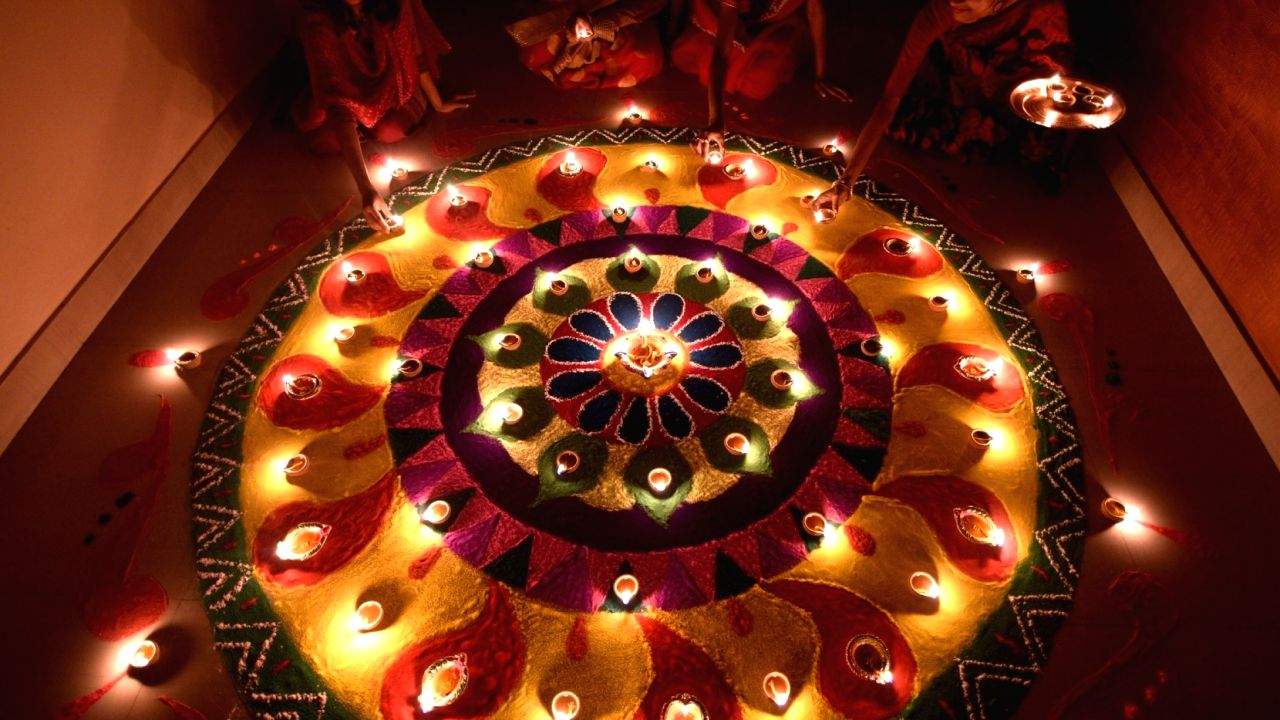
Women decorating Rangoli with colours and earthen lights on the eve of Diwali festival. Diwali 2026 is on November 08, Sunday
Diwali falls on November 08, Sunday. Also known as Deepavali, the festival of lights, it is one of the most significant and widely celebrated Hindu festivals in India and around the world. The word ‘Deepavali’ is derived from 'Deepa,' meaning 'lamp,' and ‘Avali,’ meaning 'row of lights.' This festival honors the victory of light over darkness and good over evil.
Diwali Greetings


A woman arranging earthen lamps around a 'rangoli' during Diwali celebration
Diwali 2026: 5-Day Festival Calendar
The Diwali festival 2026 is celebrated for five days:
| Day | Festival | Date | Day |
| Day 1 | Dhanteras | November 6, 2026 | Friday |
| Day 2 | Naraka Chaturdashi (Chhoti Diwali) | November 8, 2026 | Sunday |
| Day 3 | Lakshmi Puja (Main Diwali) | November 8, 2026 | Sunday |
| Day 4 | Govardhan Puja | November 10, 2026 | Tuesday |
| Day 5 | Bhai Dooj | November 11, 2026 | Wednesday |
Must Reads: Diwali 2026 Puja Timings, Muhurat, and Dates in Major Cities Worldwide
Lakshmi Puja on November 8 is the most significant and widely observed day of the festival.
Why is Diwali celebrated?

People light diyas on the ocassion of diwali festival in Ayodhya
Diwali represents the victory of righteousness over evil and light over darkness. The festival is also associated with several important historical and religious events in Hindu culture.
According to the Ramayana, Lord Rama returned to Ayodhya with Sita and Lakshmana after defeating the evil king Ravana. The people of Ayodhya lit diyas to welcome them, a tradition that continues to this day during Diwali celebrations.
On Kartik Amavasya, devotees worship Goddess Lakshmi, the deity of wealth, along with Lord Ganesha, the harbinger of prosperity and success.
In the eastern parts of India, Diwali is observed as Kali Puja, dedicated to Goddess Kali, the fierce and compassionate form of Goddess Parvati.
In the Jain tradition, Diwali commemorates the nirvana of Lord Mahavira, and for Sikhs, it coincides with the Bandi Chhor Divas, which honors the release of Guru Hargobind.
Although Diwali in 2026 is celebrated across communities, the core value remains the same: the victory of light over darkness.
Diwali 2026 Shubh Muhurat and Amavasya Tithi Timings
| Sunrise | November 08, 06:39 AM. |
| Sunset | November 08, 04:39 PM. |
| Amavasya Tithi Timing | November 08, 12:58 AM - November 09, 02:02 AM |
| Pradosha Puja Time | November 08, 04:39 PM - 07:27 PM |
| Nishita Kaal Time | November 08, 11:12 PM - November 09, 12:08 AM |
| Place : New York City [ United States ] See More | |

A woman gives final touches to Rangoli on the occasion of Diwali festival
Rituals of Diwali in 2026
The rituals of Diwali are observed over five days, with each day carrying its own significance.
- Dhanteras: The Diwali festival begins with Dhanteras, which is considered an auspicious time for purchasing gold and silver, along with starting new ventures. In various parts of the country, it signifies the beginning of the financial year for traders.
- Naraka Chaturdashi or Chhoti Diwali: The second day of the festival commemorates the victory of Lord Krishna over the demon Narakasura. The festival also represents the defeat of evil and is marked by the illumination of lamps.
- Lakshmi Puja or Main Diwali on Kartik Amavasya: The most important day of Diwali celebrations falls on the Amavasya, when devotees worship Goddess Lakshmi, the deity of wealth and prosperity, along with Lord Ganesha for wisdom and success. On this day, homes are illuminated with diyas and candles to symbolize the invitation of prosperity and abundance.
- Govardhan Puja: The fourth day honors Lord Krishna lifting Govardhan Hill to protect the villagers from heavy rains sent by Lord Indra. In many regions, devotees prepare Annakut, a tiered offering of 56 vegetarian dishes to the deities, symbolizing gratitude, abundance, and nature's sustenance.
- Bhai Dooj: The final day of Diwali honors the sacred bond between brothers and sisters, with sisters performing aarti for their brothers and offering prayers for their long life and well-being.
Common Diwali Traditions in 2026
Here are some of the most widely followed traditions during the 2026 Diwali across India, reflecting joy and the spirit of togetherness.
Cleaning and decorating homes: Homes are thoroughly cleaned before Diwali to invite positive energy during the auspicious festival. Many people repaint and adorn their houses with torans and lights to symbolize the invitation of prosperity and positivity.
Lighting Diyas: Oil lamps are lit in rows at entrances and balconies to symbolize the triumph of light over darkness. The warm glow of the diyas is believed to guide Goddess Lakshmi into homes and bring prosperity.
Creating colorful Rangolis: Vibrant and intricate rangoli patterns are drawn in front of the main doors using colored powders, rice, or flower petals. While enhancing the festive ambiance, these artistic designs are also considered a spiritual sign of hospitality.
Wearing new clothes: During Diwali, people often wear new or traditional outfits to mark a fresh beginning and to celebrate the joyous occasion.
Exchanging sweets and gifts: Friends and family share sweets and gifts as a gesture of love and goodwill. This custom promotes happiness in the community and strengthens ties between people.
Family feasts and gatherings: During this time, elaborate feasts featuring festive delicacies are prepared and enjoyed together, as Diwali is also a season of family bonding, laughter, and cherished memories.
Performing Lakshmi Puja and Ganesha Puja: Special prayers and pujas are offered to Goddess Lakshmi for wealth and prosperity, while Lord Ganesha is worshipped for wisdom and success.
Fireworks: During the night, firecrackers illuminate the sky, adding to the festive spirit and symbolizing joy, although many people opt for eco-friendly alternatives.
Diwali Fairs and Markets: Large Diwali fairs and markets are organized across India during this festive period. These events serve as cultural and commercial hubs where artisans, performers, and traders gather to showcase performances, music, and handicrafts, which are major attractions.

Regional Variations of Diwali
Diwali in India is celebrated differently across various states, with each region adding its own cultural and traditional significance to the festival.
North India: In the northern parts of India, Diwali primarily centers around Lakshmi Puja and the return of Lord Ram to Ayodhya after 14 years of exile. Homes are illuminated to celebrate his victory over the evil King Ravana and the restoration of righteousness.
South India: In South India, Diwali signifies the victory of Lord Krishna over the demon Narakasura. Celebrations begin early in the morning with prayers and the bursting of crackers to symbolize the destruction of negativity.
West Bengal: West Bengal celebrates Diwali as Kali Puja, dedicated to Goddess Kali. To gain protection and spiritual strength, devotees worship the goddess's fierce form at night.
Maharashtra: In Maharashtra, Diwali festivities begin with Vasu Baras, a day dedicated to the worship of cows and calves as symbols of prosperity and motherhood. The celebrations then extend for several days.
Gujarat: In Gujarat, Diwali marks the beginning of the new financial year for businesses, with traders performing Chopda Puja, the worship of account books, to pray for prosperity and success in the coming year.
The Spiritual Message of Diwali
Diwali illuminates homes and hearts, reminding everyone that hope will always triumph over despair, knowledge will eliminate ignorance, and righteousness will ultimately prevail over evil. The festival strengthens bonds of unity and togetherness by bringing families, friends, and communities closer to share joy and gratitude. Lighting diyas during this time means much more than a ritual; it is a symbol of removing inner darkness and awakening the light of wisdom within oneself.
FAQs on Diwali 2026
1. What is Diwali?
Diwali is a five-day Hindu festival during which people light diyas, worship Goddess Lakshmi, and decorate homes with Rangoli to celebrate the triumph of light over darkness.
2. What is the date of Diwali in 2026?
Diwali is on November 08, Sunday, 2026. The exact Lakshmi Puja Muhurat and Amavasya Tithi timings depend on your location.
3. Which day is Lakshmi Puja in 2026?
Lakshmi Puja will be performed on the third day of the Diwali festival during the evening Pradosh Kaal, which falls on November 08, Sunday, 2026.
4. Why is Amavasya important for Diwali?
Diwali is observed on Kartik Amavasya, the new moon day, which is considered highly auspicious for worshipping Goddess Lakshmi.
Diwali festival dates between 2020 & 2030
| Year | Date |
|---|---|
| 2020 | Saturday, 14th of November |
| 2021 | Thursday, 4th of November |
| 2022 | Monday, 24th of October |
| 2023 | Sunday, 12th of November |
| 2024 | Thursday, 31st of October |
| 2025 | Monday, 20th of October |
| 2026 | Sunday, 8th of November |
| 2027 | Thursday, 28th of October |
| 2028 | Tuesday, 17th of October |
| 2029 | Monday, 5th of November |


Other Related Festivals
Disclaimer:This page is provided for informational purposes only. Dates, timings, rituals, celebrations, and observances may vary by location, calendar system, panchang calculations, regional traditions, and local customs.